


- The Idaho state tree is the Western White Pine, an evergreen tree that grows up to 80 feet tall on a straight trunk, with a low-limbed, tall narrow and pointed silhouette.
- The official Idaho state soil is called Threebear, these soils occur on five to 35 percent slopes. They are a yellowish colored silty loam and the name comes from a creek in Latah County.
- Carrots weren’t originally orange. The first cultivated carrots were purple, white or yellow. The familiar orange variety was selectively bred in the Netherlands in the 1600s, allegedly as a patriotic nod to the Dutch royal House of Orange. Yes, carrots were basically political propaganda.
- Plants can “hear” caterpillars chewing them. Research shows some plants detect the vibration of insect feeding and respond by producing chemical defenses. In other words, they can’t scream, but they absolutely know they’re being eaten.
- Lawns are historically a flex. Grass lawns became popular because only wealthy landowners could afford land they didn’t need to farm. A lawn basically says: “I’m rich enough to grow food nowhere on purpose.”
- Talking to plants isn’t totally crazy. They don’t understand words, but they do respond to vibrations. Some studies show certain sound frequencies can stimulate growth, so your terrible singing might still be helping.
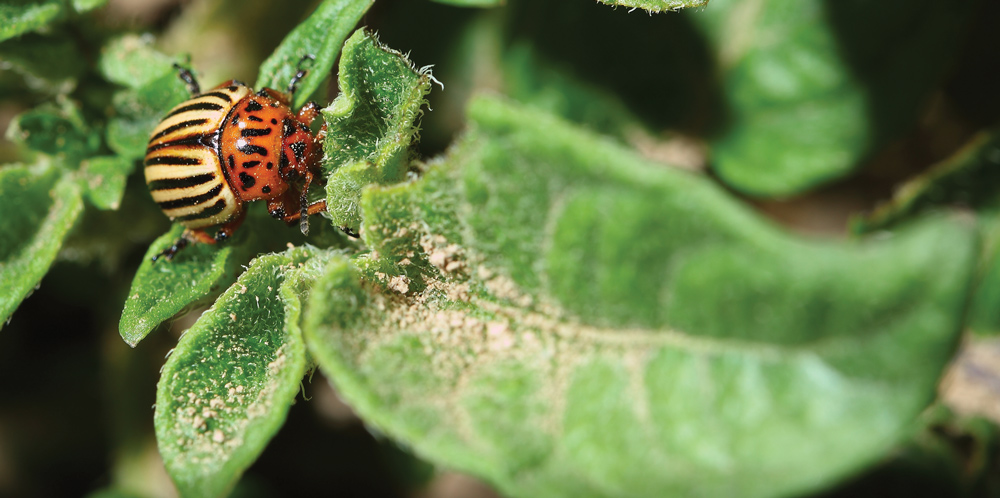
A: “You don’t really need to control Colorado potato beetles unless and until they defoliate more than 10 or 15 percent of your potato leaves,” says Bob Stoltz, University of Idaho Extension entomologist.
If they reach that point, you really should try to do something about them. Handpicking works but gardeners also have some newer, “environmentally friendly” options to choose from. Try Bacillus thuringiensis, which destroys the beetles’ gut lining; neem oil, which repels them, interferes with their feeding and disrupts their growth patterns; or a spinosad product like Gardens Alive’s Bulls-Eye, which paralyzes them. Or, use more conventional insecticides like Sevin, diazinon or permethrin.
A: You can blast them off with water or mist them gently with insecticidal soap, says Ed Bechinski, University of Idaho integrated pest management specialist. Either way is gentle on the environment.
Insecticidal soaps differ from body or dish soaps in their very specific carbon chain length, Bechinski says. “They’re intentionally designed to kill soft-bodied insects without harming plant leaves.” (Notable exceptions are glossy-needled plants like spruce trees and hairy-leaved plants like violets, which can’t tolerate the stuff.)
Unfortunately, insecticidal soaps lose their effectiveness as soon as they dry. Because they have no residual impact, you need to reapply them every three days to keep up with aphid infestations.
“The pluses outweigh the minuses,” Bechinski says. “Insecticidal soaps offer a huge margin of safety for you, me, our pets and the overall environment.”
Source: University of Idaho Coopertive Extension, Bonneville County